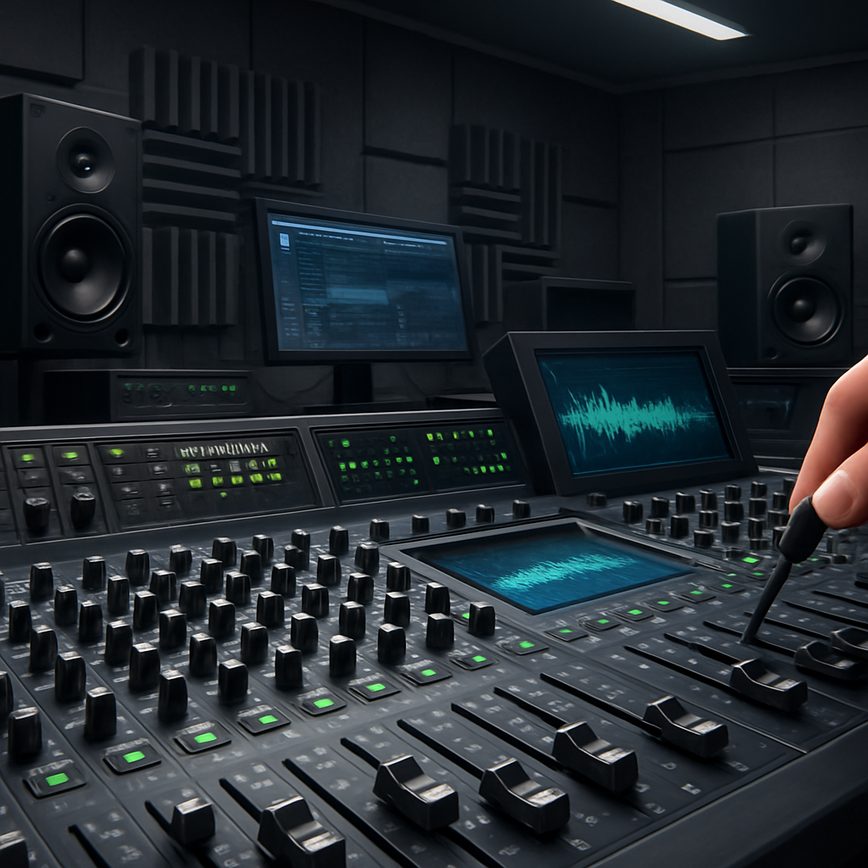
Understanding Procedural Audio
Procedural audio is a method of sound generation that leverages algorithms and real-time processing to create dynamic audio content, rather than relying on pre-recorded sound files. Unlike traditional audio recordings, where sounds are captured, edited, and stored as fixed waveforms, procedural audio synthesizes sounds on the fly, offering greater flexibility and variability.
At its core, procedural audio uses audio synthesis techniques to generate sound signals based on mathematical models and input parameters. This approach allows sound to change in response to environmental cues, user interactions, or internal states within a digital application. For example, in video games or virtual reality experiences, procedural audio can adapt footsteps to different surfaces or alter engine sounds based on speed and damage in real time, making the audio experience more immersive and realistic.
The fundamental difference between procedural audio and traditional audio recordings lies in flexibility and resource efficiency. Traditional sound design depends heavily on played-back recorded clips, which can require vast libraries to cover various scenarios, leading to high storage demands. Procedural audio, on the other hand, generates sound programmatically, often using less memory while enabling endless variations of sound. This adaptability is crucial for interactive media where unpredictability and variability enhance user engagement.
In modern sound design, procedural audio is significant because it empowers creators to produce more responsive and contextually appropriate audio content. It opens new possibilities for audio designers to craft complex soundscapes that evolve dynamically, reflecting changes in the environment or gameplay without the need for extensive manual editing. This ability not only improves the user experience but also streamlines production pipelines by reducing dependency on extensive recorded assets.
Overall, procedural audio represents a powerful evolution in sound generation techniques. By combining audio synthesis with real-time processing, it enables the design of rich and interactive sound environments that traditional recording methods cannot easily achieve. As technology advances, procedural audio continues to play a pivotal role in creating innovative and immersive auditory experiences across various digital media.
How Procedural Audio Works
Procedural audio is generated dynamically through advanced audio algorithms and sound modeling techniques. Rather than relying on pre-recorded audio clips, procedural audio uses computational methods to synthesize sounds in real-time. This approach enables highly adaptable and interactive audio experiences, as sounds can be modified instantly based on user input or environmental changes within an application or game.
The core of procedural audio involves sound modeling, where physical or mathematical models simulate the behavior of real-world sound sources. These models might represent anything from vibrating strings to wind or water, allowing developers to create authentic auditory textures that evolve naturally over time. By operating the models through audio processing units, sounds are crafted algorithmically rather than sampled.
Real-time audio rendering is essential in procedural sound generation, leveraging techniques such as synthesis, filtering, and modulation to adapt audio output on the fly. This means the audio algorithms continually process input parameters, like environmental variables or gameplay events, and update the sound accordingly without noticeable delay. The efficiency of these algorithms and the optimization of audio processing pipelines are critical to maintaining low latency and high-quality sound.
Overall, procedural audio represents a sophisticated fusion of audio algorithms, sound modeling, and real-time audio processing to create dynamic, responsive soundscapes that enhance immersion and interaction.
Benefits of Procedural Audio
Procedural audio offers numerous advantages that make it an essential tool for modern applications, especially in interactive media and gaming. One of the primary benefits is adaptive sound, which means audio dynamically changes in response to user actions or environmental factors. This creates a more immersive experience since sounds are not static but evolve in real time based on context.
Another critical advantage is resource efficiency. Traditional audio often relies on pre-recorded sound files, which can consume significant memory and storage space. Procedural audio, however, generates sounds algorithmically, requiring far less memory and reducing the overall load on system resources. This efficiency is crucial for applications running on devices with limited hardware capabilities, such as mobile phones or VR headsets.
Interactive audio is enhanced through procedural techniques, enabling developers to create custom sounds that respond immediately to user input. This high level of interactivity boosts user engagement by making audio an integral part of the experience rather than a passive background element. Furthermore, procedural audio’s flexibility allows for an infinite variety of sounds from a limited set of parameters, giving creators the freedom to design unique soundscapes tailored to their specific needs.
In summary, procedural audio’s adaptability, resource efficiency, and ability to deliver interactive, custom sound design make it a powerful choice for developers aiming to enrich user experiences while optimizing performance.
Applications of Procedural Audio
Procedural audio has established itself as an essential technology across multiple industries, bringing dynamic and immersive soundscapes that adapt in real-time to user interactions and environments. One of the most significant applications is in video games, where procedural audio enhances player immersion by generating sounds that respond instantly to game states and actions. For example, footsteps, weapon noises, and environmental sounds like rustling leaves or flowing water can change depending on the game context, providing a more natural and engaging experience without relying on static audio samples.
In the realm of virtual reality, procedural audio is crucial for creating believable and responsive sound environments. Since VR immerses users in fully interactive 3D spaces, sound must adapt precisely to user movements and positions. Procedural audio can simulate realistic audio reflections, occlusions, and Doppler effects, helping to reinforce spatial awareness and presence. This dynamic audio approach significantly enhances the sense of realism and immersion that is fundamental to effective virtual reality experiences.
The film industry also leverages procedural audio extensively in film sound design. While traditional sound design often relies on pre-recorded effects, procedural audio offers filmmakers the flexibility to fine-tune sounds interactively during post-production. This is especially useful for complex or evolving soundscapes, such as sci-fi environments, mechanical systems, or nature scenes where ambient sounds need to adapt to visual changes. Procedural techniques allow sound designers to create rich, layered audio that can be edited and modified efficiently without re-recording.
Beyond entertainment, procedural audio finds applications in interactive media such as installations, exhibits, and educational tools. Here, sound dynamically changes based on user input or environmental triggers, providing a unique and engaging interactive experience. For instance, museum exhibits can use procedural audio to create responsive soundscapes that react to visitor movements or interactions, making the experience both informative and immersive. Interactive media benefits from procedural audio’s ability to produce varied and non-repetitive sounds, keeping engagement high.
In summary, procedural audio is a versatile tool that enhances multiple industries by providing adaptable, context-sensitive sound design. From the realistic and reactive soundscapes in video games and virtual reality to the custom-tailored sound effects in film and interactive media, procedural audio continues to push the boundaries of how we experience sound in digital environments.
Procedural Audio in Video Games
Procedural audio plays a crucial role in modern video games by enabling the creation of adaptive soundscapes, sound effects, and dynamic music that respond in real-time to gameplay actions. Unlike pre-recorded audio, procedural audio is generated algorithmically, allowing for a highly immersive sound environment that evolves based on the player’s interactions and the game’s state.
In game audio design, procedural techniques ensure that sound effects such as footsteps, weather, and ambient noises feel natural and varied without repetition. This variability enhances player immersion, making the virtual world feel alive and responsive. For example, footsteps might change sound depending on the surface the character walks on, while environmental sounds adjust dynamically as the player moves through different areas.
Dynamic music, another important aspect of procedural audio, shifts seamlessly with gameplay events—heightening tension during combat or relaxing the atmosphere during exploration. By algorithmically layering musical elements, the soundtrack adapts continuously, enhancing emotional engagement and supporting the narrative. This adaptive music approach also reduces the need for extensive audio files, optimizing game performance.
Overall, procedural audio transforms game audio from static playback to an interactive experience, providing rich, evolving soundscapes that elevate immersion and player connection to the game world. By integrating procedural sound effects and dynamic music, developers craft more engaging and memorable gaming experiences.
Use in Virtual and Augmented Reality
Procedural audio plays a crucial role in enhancing the immersive experience in both virtual reality (VR) and augmented reality (AR) environments. By leveraging VR audio and AR sound, procedural techniques enable dynamic, real-time audio generation that responds directly to user interactions and the surrounding virtual space. This adaptability is essential for creating spatial audio cues that accurately reflect the position and movement of sound sources relative to the listener, providing a heightened sense of presence.
Unlike traditional pre-recorded audio, procedural audio in VR and AR environments continuously evolves based on user input and environmental changes. This interactivity allows sounds to change naturally and fluidly, matching actions like walking, object manipulation, or environmental events, thereby deepening the immersive quality of the experience. The real-time synthesis of sound effects ensures that the auditory scene remains coherent and believable from every angle and distance.
Moreover, spatial audio facilitated by procedural sound design contributes to the realism of virtual worlds by mimicking how humans perceive sound in the real environment — sounds can be localized in 3D space, altering in volume, direction, and frequency based on the listener’s perspective. This capability is especially important in VR and AR applications where immersion directly impacts user engagement and interaction effectiveness.
In summary, procedural audio enriches VR and AR by providing a highly responsive, spatially accurate, and interactive soundscape that supports the overall goal of creating a fully immersive experience where users feel genuinely present within the digital or augmented realm.
Future Trends and Challenges in Procedural Audio
Procedural audio is on the brink of significant evolution, propelled by cutting-edge technologies such as AI audio and machine learning sound. These innovations are reshaping how soundscapes are generated and manipulated in real time, enabling more immersive and dynamic audio experiences across various applications, including gaming, virtual reality, and interactive media.
One of the most exciting trends is the integration of machine learning algorithms into procedural audio systems. Machine learning models can analyze vast datasets of sounds and learn to synthesize new audio textures that adapt seamlessly to changing environments. This allows audio designers to move beyond static sound libraries and achieve nuanced, context-aware sound effects that evolve alongside user actions or game states.
Real-time synthesis is another pivotal development in this domain. Advances in processing power and algorithm efficiency mean that procedural audio engines can now generate high-quality sounds instantaneously, without the latency issues that once limited their use. This real-time capability opens the door for highly interactive audio experiences, where every user interaction or environmental change is reflected audibly with minimal delay.
Despite these technological leaps, several challenges remain. Procedural audio systems must balance computational load with sound quality, especially in resource-constrained environments like mobile devices. Ensuring that procedurally generated audio maintains a high level of realism and emotional impact also requires ongoing research into more sophisticated synthesis techniques and psychoacoustic models.
Moreover, the integration of AI-driven audio solutions introduces questions about creative control. While AI can generate complex soundscapes, striking the right balance between automated synthesis and human artistic direction is crucial to preserve the unique identity and emotional resonance of audio content.
Looking ahead, the future of procedural audio lies in continuous innovation fueled by AI audio, machine learning, and real-time synthesis advancements. These technologies promise to transform audio production workflows, making them more adaptive, efficient, and artistically expressive. The emerging audio landscape will likely feature ever more sophisticated tools that empower creators to push the boundaries of sound design and craft immersive aural worlds with unprecedented flexibility.
Emerging Technologies Shaping Procedural Audio
Artificial intelligence (AI) and machine learning are ushering in a new era for procedural audio, transforming how sounds are generated and integrated within interactive environments. Through techniques like neural synthesis, AI models learn from vast datasets of audio to create highly realistic and adaptive sounds that respond dynamically to gameplay or user interaction. This advancement enables audio programming to go far beyond traditional sample playback, allowing for infinite variations of soundscapes that evolve in real time.
Machine learning algorithms analyze contextual data to produce audio that adapts intelligently, enhancing immersion by matching the auditory experience precisely to game states or application scenarios. Neural synthesis, a cutting-edge AI method, creates novel audio textures by predicting waveforms rather than relying on pre-recorded assets. This capability reduces memory usage and opens new possibilities for customization and procedural sound design.
AI generated audio is particularly impactful in procedural audio systems, offering creators unprecedented control and efficiency. By automating the generation of complex, layered sounds, developers can focus more on creative expression and less on manual audio asset management. The integration of AI and machine learning into audio programming is rapidly evolving, promising ongoing innovations that will redefine how interactive media sound is crafted and experienced.
Common Challenges and Limitations
Procedural audio presents unique challenges that developers and sound designers must navigate to achieve optimal results. One major difficulty is the computational cost associated with generating sounds in real-time. Procedural audio often requires significant processing power, which can create performance bottlenecks, especially in resource-constrained environments like mobile devices or complex game scenes. Balancing the demand for high-quality sound while maintaining smooth performance remains a persistent challenge.
Another concern is the trade-off between procedural generation flexibility and audio quality. While procedural audio enables dynamic and adaptive soundscapes, the quality may sometimes fall short compared to pre-recorded sounds, particularly due to limitations in synthesis models and algorithms. Ensuring that procedural sounds are both realistic and pleasing without excessive computational overhead requires advanced sound design skills and constant refinement.
Integration issues also pose significant hurdles. Procedural audio systems must be embedded seamlessly into existing software or game engines, which often demands custom pipelines and tools. Compatibility problems, debugging difficulties, and lack of standardized frameworks can slow down development and complicate collaboration between teams.
Lastly, sound design constraints arise from the inherent complexity of creating adaptable audio assets that respond properly to user interactions and environmental variables. Designers must carefully plan and test procedural parameters to avoid unnatural or repetitive sounds. Despite these challenges, ongoing advancements continue to enhance the feasibility and effectiveness of procedural audio in interactive media.

I’ve been playing video games since I was a kid, and that passion naturally led me to explore how they’re made. I love diving into game design concepts and sharing insights with fellow enthusiasts. When I’m not testing new titles, I’m tinkering with Unity and learning new programming tricks.