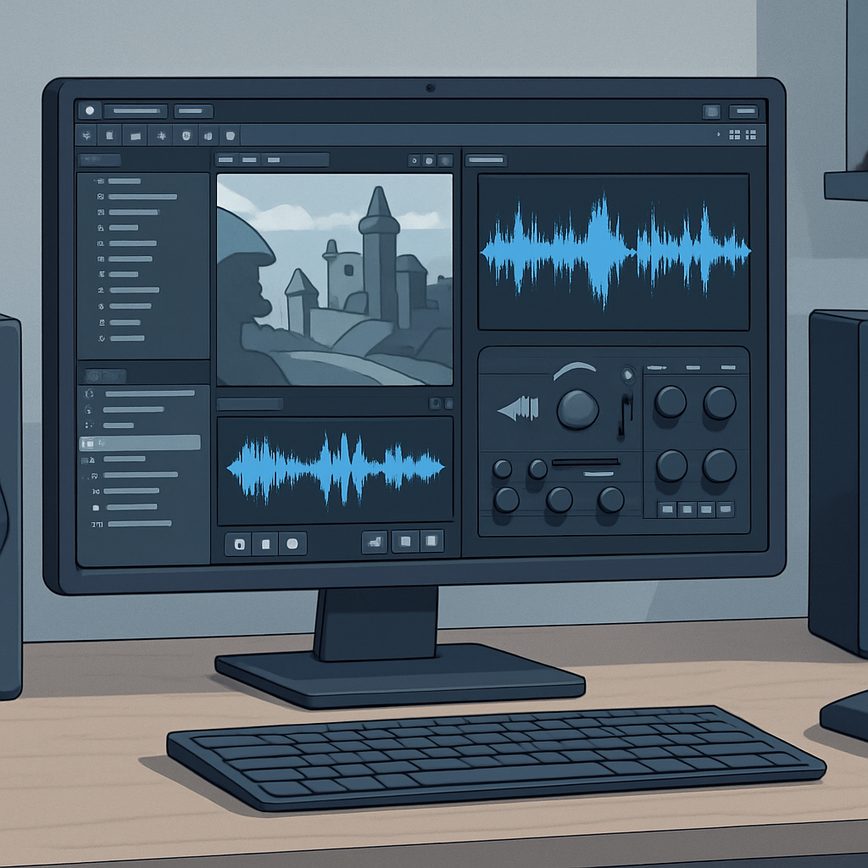
Overview of Game Engines and Their Audio Capabilities
Game engines have become indispensable tools in the development of modern video games, offering a comprehensive suite of features that streamline the entire creation process. Among these features, built-in audio support stands out as a critical component that significantly enhances the gaming experience. Game engines provide developers with the tools needed to integrate complex soundscapes, realistic sound effects, and immersive audio environments directly within their projects, eliminating the need for external audio processing software.
Audio capabilities in game engines are designed to handle everything from simple sound triggers to advanced 3D spatial audio, giving developers the flexibility to create dynamic and engaging sound integration. This includes support for multiple audio formats, real-time audio mixing, effects such as reverb and echo, and the ability to react programmatically to in-game events. Such robust sound integration allows for a seamless blend of gameplay and audio, where sound not only enhances the atmosphere but also provides crucial gameplay cues.
The reason audio is so crucial in games is that it enriches the player’s sensory experience and deepens emotional engagement. Sound effects can signal danger, reward accomplishments, or guide players, while ambient sounds and music build atmosphere and immersion. Without effective audio integration, even the most visually impressive games can feel lifeless and incomplete. Game engines that specialize in audio support empower creators to produce complex auditory scenes that interact fluidly with gameplay mechanics and narrative elements.
Furthermore, advances in audio technology within game engines now include support for procedural audio generation and adaptive music systems, which can change in real-time based on player actions or game states. This level of audio dynamism is essential in crafting unique and personalized gaming experiences. As a result, understanding and utilizing the audio capabilities of game engines is fundamental for developers aiming to deliver immersive, high-quality interactive entertainment.
Popular Game Engines with Audio Support
When it comes to game engine comparisons, Unity, Unreal Engine, and Godot stand out for their robust audio capabilities. Unity audio tools provide developers with a powerful and flexible system that supports 3D spatialization, real-time mixing, and an extensive asset pipeline. Unity’s Audio Mixer allows intricate control over audio groups, effects, and transitions, making it ideal for immersive sound design in games.
Unreal Engine sound features are equally sophisticated, offering a comprehensive audio system integrated tightly with its broader environment. With support for complex audio behaviors, Unreal Engine provides real-time DSP effects, multi-channel spatialization, and interactive audio environments through its Blueprint visual scripting. This lets developers craft dynamic soundscapes that react to gameplay events seamlessly.
Meanwhile, the Godot audio system is growing in popularity due to its open-source nature and ease of use. It offers a modular sound engine including support for 2D and 3D audio playback, buses for mixing, and effects like reverb and EQ. Godot’s audio server is designed to be lightweight yet powerful enough for a wide range of game genres, making it an excellent choice for indie developers looking for flexibility without heavy resource demands.
Each of these engines provides unique strengths in audio support, making game engine comparisons essential for developers aiming to match their project’s needs with the best audio tools available.
Types of Audio Supported in Game Engines
Game engines today offer a variety of audio support systems designed to create immersive and realistic soundscapes. One key feature is 3D audio, which simulates how sounds originate and move in three-dimensional space. This allows players to perceive the direction and distance of audio sources precisely, enhancing gameplay through realistic sound positioning. 3D positional sound is especially crucial in first-person and virtual reality games where spatial awareness is key.
Spatial audio takes this concept further by creating a more enveloping sound environment. It simulates how sound interacts with the surroundings, such as reflecting off walls or being absorbed by different materials. This results in a richer audio experience where players can sense the ambiance and position of objects relative to their avatar, providing a heightened sense of presence within the game world.
Dynamic audio mixing is another important capability found in advanced game engines. It allows sounds to be programmatically adjusted in real-time based on gameplay events or player actions. This includes variations in volume, pitch, and effects, enabling a responsive and adaptive sound environment. Game engines support multiple audio formats to ensure compatibility and optimized sound quality across different platforms and devices.
Together, these audio technologies help developers create engaging and believable auditory experiences that complement the visual elements and gameplay mechanics, making the game world feel alive and interactive.
Integration and Enhancement of Audio in Game Development
In the realm of game development, audio integration plays a crucial role in creating an immersive and engaging player experience. Developers focus extensively on game audio design to seamlessly blend sound effects, music, and dialogue within the gameplay environment. To achieve this, many studios leverage audio middleware tools, which act as a bridge between the game engine and audio assets, facilitating smoother and more dynamic sound implementation.
Audio middleware, such as FMOD and Wwise, provides developers with powerful features that go beyond the native capabilities of most game engines. These tools support complex audio behaviors, real-time mixing, and adaptive music scoring, which responds to gameplay actions and player interactions. By using middleware, sound designers and developers can experiment with audio parameters without needing to modify the core game code, streamlining the production workflow and enhancing creativity in sound enhancement.
Best practices in audio integration emphasize early involvement of audio teams in the game development process to ensure smooth synchronization between sound and gameplay mechanics. Consistent testing on different playback systems and environments is vital to maintain audio clarity and impact. Additionally, utilizing spatial audio techniques and environmental reverb effects enrich the auditory experience by adding realism and depth to game worlds.
Efficient audio integration also involves optimizing sound assets for performance, ensuring minimal impact on game load times and runtime resources. Developers often implement audio asset management strategies, including compression and streaming, to balance quality with system constraints. Sound enhancement techniques such as layering multiple audio sources, applying filters, and dynamic volume control help create a rich and immersive soundscape that enhances player’s emotional connection to the game.
Ultimately, the integration and enhancement of audio in game development require a collaborative effort between developers, sound designers, and composers. By utilizing audio middleware and adhering to best practices in game audio design, teams can produce compelling and responsive sound experiences that elevate the overall quality and enjoyment of their games.
Using Audio Middleware with Game Engines
Audio middleware like FMOD and Wwise has become essential in modern game development, providing powerful sound design tools that integrate seamlessly with game engines. These middleware solutions enhance the audio capabilities of engines by allowing sound designers and developers to create complex and dynamic audio environments without needing to write extensive code.
FMOD offers a user-friendly interface alongside advanced features for real-time audio manipulation, making it popular among developers aiming for immersive soundscapes. Its integration with popular game engines simplifies the process of implementing adaptive music, interactive sound effects, and spatial audio, resulting in a richer gameplay experience.
Similarly, Wwise is known for its robust audio pipeline and extensive customization options. It supports intricate sound behavior rules and flexible asset management, enabling developers to fine-tune audio beyond the native capabilities of most game engines. Wwise also facilitates collaboration between audio teams and programmers, streamlining the workflow from sound design to implementation.
By leveraging audio middleware such as FMOD and Wwise, game developers can significantly improve the quality and depth of their game’s sound design. These tools bridge the gap between creative audio vision and technical execution, ensuring that game audio is not only immersive but also adaptive to gameplay events and player actions.
Best Practices for Audio Implementation
When designing game audio, following best practices ensures an immersive experience. Start with sound effects by selecting high-quality samples that match the game’s aesthetic. Use variation in sound effects to avoid repetition fatigue; slight variations in pitch or timing can make sounds feel more natural and engaging. Also, position sound effects spatially to support gameplay mechanics and enhance player awareness.
Background music should be carefully integrated to complement game scenes without overwhelming the action. Opt for adaptive music that changes according to game states, such as battle or exploration, which maintains emotional engagement. Keep the levels balanced so music and sound effects coexist harmoniously; background music should enhance rather than compete with the core gameplay audio.
Audio optimization is crucial for performance and player satisfaction. Compress audio files without compromising quality to reduce load times and memory usage. Use audio middleware or engine-specific features to manage audio channels efficiently and avoid clipping or distortion. Implement volume controls and audio settings to give players flexibility in customizing their sound experience, aligning with game audio best practices for accessibility and user comfort.
Challenges and Future Trends in Game Engine Audio Support
Game developers face numerous audio challenges when integrating sound within game engines. One significant hurdle is ensuring real-time audio processing without compromising performance. Games demand seamless synchronization between audio and visuals, yet the complex calculations required for spatial audio, sound occlusion, and dynamic effects can strain hardware resources, especially on less powerful devices. Additionally, diverse hardware and software environments present compatibility issues, requiring audio solutions to be both robust and flexible.
An essential audio challenge lies in creating truly immersive audio experiences that convincingly mimic real-world acoustics. Achieving this requires advanced modeling of sound behavior in 3D spaces, which involves capturing how sound waves interact with various surfaces and how they change as the player moves through the environment. Implementing these effects in real time necessitates substantial processing power and efficient algorithms to maintain game responsiveness.
Looking forward, future audio tech promises transformative improvements for game engine audio support. Innovations such as machine learning are being explored to optimize sound design workflows and automate audio asset generation. Moreover, advancements in ray tracing for audio, akin to visual ray tracing, allow for precise simulation of sound reflections and diffractions, enhancing realism.
Another promising trend is the integration of spatial audio platforms and hardware, such as 3D audio headphones and immersive VR sound systems, which heighten player engagement by accurately mapping sounds in virtual environments. These developments are coupled with improvements in middleware and game engine audio APIs that enable easier implementation of complex audio features.
Ultimately, overcoming current audio challenges and embracing future trends in real-time audio processing and immersive audio technologies will lead to richer, more convincing game worlds. As game audio evolves, developers will be empowered to create experiences that not only entertain but also deeply engage players through sound.
Common Audio Challenges in Game Development
Audio latency remains one of the most persistent challenges in game development, often impacting the player’s immersive experience. Delays between a player’s action and the corresponding sound effect can break the sense of realism, making precise audio timing crucial. Developers must optimize their audio pipelines and buffering strategies to minimize latency as much as possible.
Another major challenge is platform compatibility. Games today are released across multiple platforms with varying audio hardware and software capabilities. Ensuring consistent audio performance across consoles, PCs, and mobile devices requires careful handling of different audio APIs and formats to prevent discrepancies in sound quality or functionality.
Audio bugs can also severely impact gameplay. These include issues like sounds not playing, looping incorrectly, or cutting out unexpectedly. Detecting and troubleshooting such bugs demands thorough testing under diverse scenarios, since audio components often have complex, event-driven behaviors that can be difficult to replicate consistently during development.
Performance issues related to audio can strain the overall game system, particularly when dealing with numerous simultaneous sound effects and complex spatial audio processing. Developers must balance rich audio experiences with efficient resource usage to avoid frame rate drops or crashes that detract from the player’s experience. Addressing these audio challenges is key to creating engaging and polished games.
Emerging Technologies Enhancing Game Audio
Emerging technologies are revolutionizing game audio, with innovations like spatial audio, AI-driven audio design, and virtual reality (VR) sound leading the charge. Spatial audio technology allows developers to create immersive three-dimensional soundscapes that respond dynamically to player movements and environments, significantly enhancing the gaming experience. This next-gen audio technique helps gamers pinpoint sound sources with precision, boosting realism and engagement.
AI audio is another groundbreaking advancement, enabling adaptive and intelligent sound design that can evolve based on gameplay context. Using machine learning algorithms, AI can generate unique audio content, modify sound effects in real-time, and optimize audio mixing to match player interactions. This not only reduces production time but also enriches the auditory experience, making games feel more alive and responsive.
Virtual reality sound innovations complement these developments by delivering fully immersive audio environments that mimic real-world acoustics. VR audio combines spatial audio with advanced rendering techniques to ensure every sound reflects directionality, distance, and occlusion accurately. This creates a deep sense of presence, crucial in VR games where audio cues guide player awareness and interaction.
Together, these next-gen audio technologies—spatial audio, AI audio, and VR sound—are shaping the future of game audio, offering players unprecedented levels of immersion and realism. As developers continue to explore these capabilities, game soundscapes will become more dynamic, interactive, and emotionally impactful than ever before.

I’ve been playing video games since I was a kid, and that passion naturally led me to explore how they’re made. I love diving into game design concepts and sharing insights with fellow enthusiasts. When I’m not testing new titles, I’m tinkering with Unity and learning new programming tricks.