Overview of Game Audio File Formats
In game development, choosing the appropriate game audio file formats is crucial to delivering an immersive and efficient sound experience. Different file formats serve various purposes depending on the type of game sound needed, the platform limitations, and the desired balance between audio quality and performance. Understanding the common file formats used for game audio helps developers optimize sound integration and enhance gameplay.
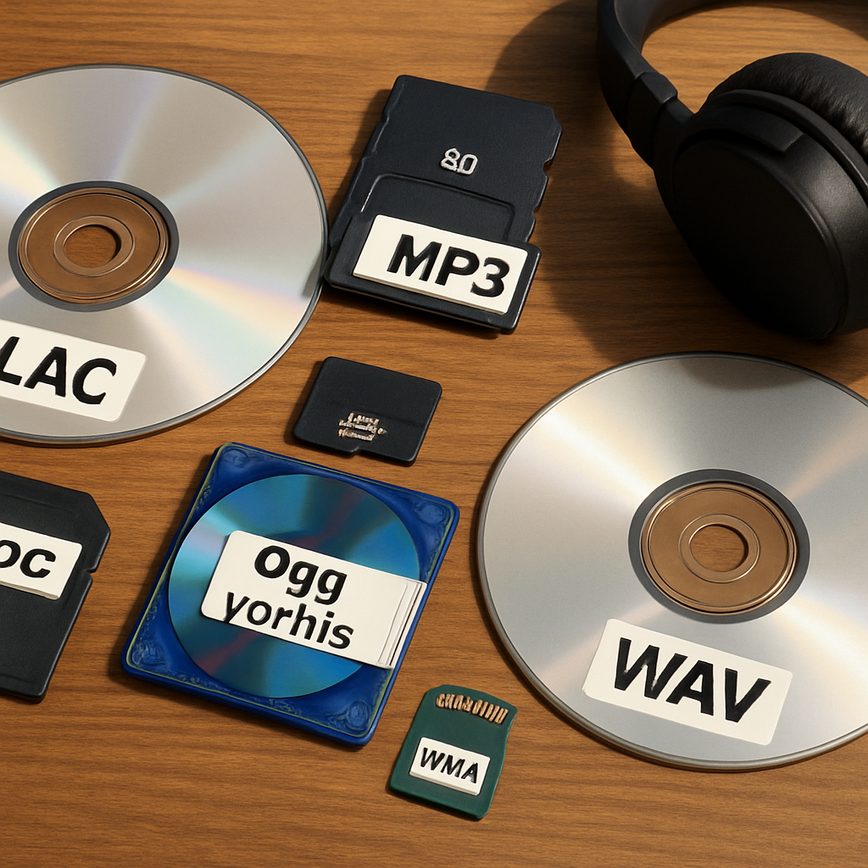
The most widely used audio file formats in games include WAV, MP3, and OGG. WAV files are uncompressed audio files known for their high quality and lossless sound. This makes them ideal for sound effects and short game audio clips where clarity and fidelity are essential. However, their large file size means they are less suitable for longer audio tracks or games with storage constraints.
MP3 files are compressed audio files that provide a good balance between file size and sound quality. They are commonly used for background music and voice recordings within games due to their smaller size, which helps conserve memory and disk space. The compression in MP3 files, while lossy, is generally transparent to most players, making them an efficient choice for continuous in-game audio.
OGG format, often seen as OGG Vorbis, is favored in game development for its open-source nature and superior compression efficiency compared to MP3. It offers high-quality audio at lower bitrates, making it perfect for lengthy game soundtracks and ambient sounds. Many modern game engines support OGG because it allows developers to optimize the audio experience without sacrificing quality or performance.
Other formats like AIFF and FLAC are occasionally used when lossless audio is necessary but are less common due to their larger sizes. Additionally, some games use proprietary or middleware-optimized formats tailored for specific audio engines or interactive audio needs. Ultimately, the choice of file formats in game audio depends on the type of audio being implemented, the target platform’s capabilities, and the development goals.
By understanding the strengths and limitations of these audio types, developers can make informed decisions to enrich their game sound design. From high-fidelity sound effects to compressed musical scores, selecting the right file formats ensures game audio delivers both immersive quality and efficient performance.
Uncompressed Audio Formats
Uncompressed audio formats like WAV (Waveform Audio File Format) and AIFF (Audio Interchange File Format) are commonly used in game audio production due to their pure, lossless quality. Unlike compressed formats that reduce file size by removing some audio data, uncompressed audio retains every bit of the original sound, making it ideal for preserving fidelity. This lossless characteristic ensures that the audio output remains crystal clear without any artifacts or distortion.
The primary advantage of using WAV and AIFF formats is their high quality, which is crucial for sound effects, dialogue, and music in video games where audio clarity can significantly enhance the player’s experience. These formats support multiple sample rates and bit depths, allowing sound designers to work with studio-quality audio directly within the game environment. Additionally, they offer compatibility with most sound engines and game development platforms, making them versatile and reliable choices.
Typical use cases for uncompressed audio in games include key sound effects such as footsteps, weapon sounds, and ambient noises where detail and accuracy are important. They are also preferred for dialogue and cinematic sequences to ensure voice overs sound natural and immersive. While uncompressed audio files are larger in size compared to compressed ones, their superior quality makes them a staple in situations where performance and audio excellence are prioritized over storage constraints.
Compressed Audio Formats
In the realm of game audio, compressed formats like MP3 and OGG have become staples due to their efficiency in reducing file size while maintaining reasonable sound quality. MP3, one of the most widely supported compressed audio formats, uses lossy compression to significantly shrink audio files, making them ideal for games where storage space and download size are critical considerations. The format’s universality ensures compatibility across virtually all game development platforms and playback systems.
OGG, or Ogg Vorbis, is another popular compressed audio format favored in game development for its open-source nature and excellent balance between compression rate and audio fidelity. Like MP3, it employs lossy compression, but often achieves better sound quality at similar or smaller file sizes. This makes OGG particularly attractive for developers looking for high-quality compressed audio without proprietary licensing constraints.
However, both MP3 and OGG come with trade-offs intrinsic to lossy compression. By discarding some audio information to reduce size, these formats can introduce artifacts and a loss of audio nuances that may be noticeable in high-fidelity soundtracks or critical audio elements. Game developers must carefully decide the acceptable balance between compressed audio’s smaller footprint and the potential impact on auditory immersion and clarity.
Ultimately, the choice between MP3, OGG, or other compressed audio formats hinges on specific project needs such as target platform constraints, desired audio quality, licensing considerations, and overall game design goals. Both formats remain essential tools for managing audio assets efficiently in contemporary game development.
Choosing the Right Format for Game Audio
Selecting the appropriate audio format is crucial for effective game optimization. The right choice balances sound quality, file size, and platform compatibility to provide the best player experience. When dealing with audio format selection, developers must consider these factors carefully to satisfy both technical constraints and creative demands.
Sound quality is often the primary concern. Lossless formats such as WAV or FLAC provide the highest fidelity, preserving every nuance of the audio. These are ideal for sounds that require detailed clarity and depth, like orchestral music or critical sound effects. However, lossless formats usually come with larger file sizes, which can impact game loading times and storage requirements.
On the other hand, compressed formats such as MP3 and OGG offer significant reductions in file size, making them suitable for games targeting platforms with limited storage or bandwidth. OGG, in particular, is popular in game development due to its open format and balance between quality and compression. Developers must weigh the degree of compression against the potential loss in audio quality to maintain an immersive sound experience.
File size directly affects game optimization. Minimizing audio file sizes helps reduce the overall game footprint, allowing faster downloads and lower memory usage. This is especially important for mobile games and web-based applications where bandwidth and storage constraints are tighter. Choosing the right format can also influence performance on these platforms by reducing decoding overhead.
Platform compatibility is another critical aspect. Some formats are natively supported on certain consoles or operating systems, while others may require additional decoding libraries or plugins, potentially complicating development and increasing overhead. It is advisable to test audio formats thoroughly across target platforms to ensure seamless playback and avoid unexpected issues.
In summary, the decision on audio format selection should align with the game’s specific requirements: prioritize sound quality for high-fidelity needs, opt for compressed formats to optimize file size and performance, and always verify platform compatibility. This balanced approach ensures the best user experience while maintaining efficient game optimization.
Factors Affecting Format Choice
When choosing audio file formats for game development, several key factors must be carefully considered to ensure optimal platform compatibility, performance, audio quality, and file size. Different gaming platforms—such as consoles, PCs, and mobile devices—often have unique restrictions on supported audio formats, which can significantly influence format decisions. Developers need to select formats that are natively supported or can be efficiently decoded on the target platform to avoid compatibility issues and reduce additional processing overhead.
Performance is another critical aspect, especially for resource-constrained platforms. Some compressed audio formats require less memory and CPU power to decode, which helps maintain smooth gameplay and reduces lag. Choosing a format that balances compression efficiency with decoding speed is crucial for providing a seamless player experience, particularly in fast-paced or resource-intensive games.
Audio quality often competes with file size constraints, especially in games with extensive sound libraries or downloadable content. High-quality audio formats typically produce larger files, which can impact loading times and storage requirements. Developers must weigh these trade-offs carefully, often opting for compressed formats that maintain acceptable audio fidelity while keeping file sizes manageable.
Ultimately, the choice of audio format is a strategic decision that takes into account platform restrictions, memory limits, performance considerations, and the desired player experience. Balancing these factors helps ensure the game’s audio complements the gameplay without compromising technical efficiency or user satisfaction.
Best Practices for Game Audio Compression
In the game audio workflow, mastering compression techniques is crucial for achieving a balance between sound clarity and performance. Optimizing audio files ensures that the final game experience remains immersive without overloading system resources. One key best practice is to carefully select the appropriate compression format, such as Ogg Vorbis or AAC, which offer a good trade-off between quality and file size.
Another important tip is to set compression parameters thoughtfully. Bitrate should be high enough to preserve essential sound details but low enough to reduce memory usage and loading times. Variable bitrate (VBR) compression can be effective in maintaining consistent audio quality while adjusting the file size dynamically. Additionally, it’s beneficial to preprocess audio through normalization and equalization before compression to maximize clarity and minimize artifacts.
It’s also recommended to test audio files in various game scenarios, such as different hardware or environments, to ensure sound clarity is maintained. Using middleware tools or built-in game engine features to handle audio streaming and decompression on-the-fly can further optimize performance. Incorporating these compression techniques thoughtfully within your game audio workflow makes it possible to deliver high-quality sound while maintaining smooth gameplay and efficient resource management.
Advanced Audio Formats and Emerging Technologies
As the gaming industry evolves, so do the audio technologies that enhance player immersion and interaction. Advanced audio formats such as spatial audio and 3D sound are at the forefront of this evolution, creating a more believable and dynamic soundscape within games. These technologies enable sound to be accurately placed and moved around the player’s environment, mimicking real-world audio cues that drastically enhance the sense of presence and engagement.
Spatial audio formats utilize complex algorithms to simulate how sound waves interact with the environment and how they are perceived by the human ear. This creates a multi-dimensional audio experience that can significantly boost the realism in gaming. 3D sound extends this further by positioning sounds in a virtual three-dimensional space, allowing for more precise directional audio cues that can influence gameplay by providing information on enemy positions, environmental hazards, or narrative elements.
Audio middleware plays a critical role in bringing these technologies into games. Middleware solutions like FMOD and Wwise offer robust support for implementing spatial audio and 3D sound, providing game developers with tools to integrate and manipulate advanced audio formats without needing to build complex systems from scratch. These platforms not only streamline the development process but also allow for real-time audio adaptation that reacts to player actions and environmental changes.
Looking ahead, the future formats in game audio promise even greater interactivity and immersion. Innovations such as object-based audio allow each sound source to be treated as an independent object, giving players a customized and adaptable audio experience tailored to their positioning and equipment. Additionally, emerging technologies like augmented reality (AR) and virtual reality (VR) rely heavily on these cutting-edge audio formats to create truly immersive gaming worlds.
In sum, spatial audio, 3D sound, and advanced audio middleware are driving the next wave of game audio innovation, with future formats poised to expand the boundaries of what is possible. These technologies enhance not only the auditory experience but also the interactivity and emotional impact of games, making audio a fundamental part of immersive gameplay.
Spatial and 3D Audio Formats
Spatial audio formats, including ambisonics and binaural sound, are revolutionizing how players experience sound in games. These formats go beyond traditional stereo audio by creating a 3D audio environment that mimics how we naturally perceive sound in the real world. Ambisonics captures the soundscape in a spherical manner, allowing sounds to be positioned around the listener in all directions. This makes it ideal for virtual reality and immersive gaming experiences where understanding the exact location of sounds is crucial.
Binaural sound, on the other hand, uses two microphones placed at the ears of a dummy head to replicate the ear-to-ear diffraction of sound waves, delivering a highly realistic and immersive auditory experience through headphones. This method enhances player immersion by enabling players to sense not only the direction but also the distance and movement of sounds, significantly enriching gameplay environments.
Together, these spatial audio formats create an enveloping audio sphere that traditional formats cannot match. 3D audio offers a dynamic sound experience where players can perceive nuances such as footsteps approaching from behind or the rustling of leaves to their side, fostering a heightened sense of presence and realism. Using spatial audio formats in game development improves gameplay immersion, making the player feel truly part of the game world.
Integration with Audio Middleware
Modern audio middleware, such as Wwise and FMOD, plays a crucial role in game sound integration by supporting a wide range of audio file formats, allowing game developers to choose the best format suited to their needs. These tools not only facilitate the seamless import and management of audio assets but also provide robust systems to create dynamic and interactive soundscapes. By integrating with audio middleware, sound designers gain the ability to implement complex audio behaviors that adapt to gameplay in real-time, such as environmental effects, randomized sound events, and interactive music layers.
Wwise and FMOD support popular formats like WAV, MP3, and OGG, ensuring compatibility across platforms while optimizing for performance and quality. Their advanced features enable the mixing, modulation, and spatialization of sounds without writing extensive code, which streamlines the sound implementation process. This integration allows audio to respond to player actions and game states dynamically, enhancing immersion and emotional impact. Ultimately, audio middleware bridges the gap between creative sound design and technical game development, making it indispensable for delivering rich and immersive audio experiences in modern games.

I’ve been playing video games since I was a kid, and that passion naturally led me to explore how they’re made. I love diving into game design concepts and sharing insights with fellow enthusiasts. When I’m not testing new titles, I’m tinkering with Unity and learning new programming tricks.