

The pressure to ship polished titles on tighter schedules has forced studios to rethink every layer of their production pipeline, and the shift toward distributed teams has made clear communication non-negotiable. In 2026 the most successful developers treat collaboration as a technical discipline rather than a soft skill, embedding shared tooling and transparent processes directly into the engine. A measurable understanding of work behavior across disciplines, from technical artists to gameplay programmers, now drives sprint planning and resource allocation, replacing gut-feel estimates with telemetry-backed forecasts. Studios that instrument their pipelines to surface blockers in real time consistently outperform those relying on weekly stand-ups alone. This article breaks down the architectural decisions, cultural habits, and automation strategies that separate smooth launches from death-march crunches.
Work Behavior Analytics Drive Pipeline Decisions
Telemetry dashboards that track commit frequency, code-review turnaround, and asset-validation pass rates give leads a live view of team health without micromanagement. When a gameplay programmer’s pull-request cycle stretches from four hours to twelve, the system flags the drift automatically so a producer can rebalance the sprint before a milestone slips. Correlating these metrics with bug-regression data reveals which modules accumulate technical debt fastest, allowing targeted refactor windows instead of blanket code-freeze periods. One mid-sized studio reduced critical-path blockers by 38 percent in Q1 2026 simply by visualizing handoff latency between the animation rigging crew and the character-system engineers. Developers should use Game Localization Services as a tool for collaboration, not just evaluation, to ensure smooth project execution.
The aim isn’t to do the same stuff with fewer people, but to enable everyone here to build MORE and BETTER stuff, and to bring the benefits to all teams using Unreal.
Tim Sweeney, Epic CEO — arstechnica.com
Granular event streams also expose hidden dependencies that traditional Gantt charts miss. A shader variant explosion in the rendering branch might look unrelated to the audio middleware update, yet both contend for the same CI agent pool and cause queue starvation. By tagging every build artifact with the owning feature team and the downstream consumers, the pipeline can predict resource contention and auto-scale agents or stagger jobs. This level of observability turns reactive firefighting into proactive capacity planning, and it scales equally well for a twenty-person indie collective or a five-hundred-person AAA satellite studio.
Unified Asset Governance Across Engines and DCC Tools
Modern productions rarely stay inside a single content-creation application; a character may start in ZBrush, move to Substance Painter for texturing, get rigged in Maya, and finally land in Unreal Engine 5.5 for look-dev. Without a single source of truth for naming conventions, pivot-point standards, and texture-set layouts, each handoff introduces a round of manual cleanup that compounds across hundreds of assets. Leading studios now enforce schema-driven asset definitions stored in a version-controlled JSON registry that both the DCC exporters and the engine importers consume. When the technical art team updates the LOD naming rule, the change propagates to every artist’s export script on the next pull, eliminating the “which version of the spec are we on?” email thread.
Automated validation gates sit on the Perforce or Git-LFS submit path and reject assets that violate polygon budgets, UV overlap thresholds, or texture-resolution caps before they ever reach the shared depot. The gate runs a lightweight Python harness that spins up a headless instance of the target DCC, runs the checks, and returns a structured report in under thirty seconds. Artists fix the issue locally and resubmit, keeping the mainline clean and reducing the “broken build” Slack pings that derail morning stand-ups. One publisher reported a 22 percent drop in asset-rework tickets after deploying this gate across three concurrent projects.
Real-Time Collaborative Editing Inside the Engine
Unreal’s Multi-User Editing and Unity’s DevOps-linked scene fusion have matured past the prototype stage, letting multiple designers place props, tune lighting, and script gameplay sequences in the same live session. The networking layer now resolves conflicts at the property level instead of the actor level, so a level artist adjusting a spline mesh and a gameplay scripter tweaking a trigger volume on the same actor no longer overwrite each other’s changes. Session recordings capture every edit with a timestamp and author ID, enabling instant rollback or forensic analysis when a playtest reveals a regression. This shifts the iteration loop from “submit, wait for build, test” to “tune together, see instantly,” cutting level-polish passes by an estimated 30 percent on narrative-heavy projects.
The Zen van Riel channel explores innovative Monetization strategy ideas for indie game revenue in 2026, and you can watch their insights here.

Voice and spatial chat integrated directly into the viewport further reduce context-switching. A designer can ping a 3D coordinate, and the audio engine routes a spatialized whisper to the collaborator’s headset without leaving the editor. For remote teams spanning six time zones, this preserves the “over-the-shoulder” feel that used to require physical proximity. Studios that mandate at least two hours of overlapping collaborative editing per day report fewer integration surprises during milestone merges, because the merge conflicts are resolved in real time by the humans who understand the creative intent.
AI-Assisted Code Review and Shader Optimization
Large language models fine-tuned on the studio’s codebase now sit in the pull-request pipeline, suggesting fixes for common engine-specific anti-patterns, such as unnecessary Tick overrides in Unreal or excessive GetComponent calls in Unity, before a human reviewer opens the diff. The model also cross-references the project’s performance budget document, flagging a new particle system that would push the GPU frame budget over 16 ms on the minimum-spec console. Reviewers accept, modify, or dismiss suggestions with a single click, and the model learns from the feedback loop, improving its precision from 68 percent to 91 percent over six months in one documented case.
Shader permutation explosion remains a silent schedule killer. An AI-driven permutation analyzer scans the material graph, simulates the target hardware’s instruction cache, and proposes a reduced variant set that maintains visual parity within a 2 percent SSIM threshold. The tool then rewrites the shader factory code and opens a pull request with before-and-after GPU capture videos. On a recent open-world title this cut the unique shader count from 14,000 to 4,200, shrinking the full rebuild time from 42 minutes to 11 and freeing two render programmers for feature work instead of permutation gardening.
Continuous Delivery Pipelines Tailored to Console Certification
Console submission slots in 2026 are booked months in advance, and a failed certification build can push launch by six weeks. Smart studios structure their CI/CD to produce a “cert-ready” package every night, complete with platform-specific entitlements, age-rating metadata, and the exact disk layout the manufacturer expects. The pipeline runs the full compliance test suite, TRC, TCR, LotCheck, in a cloud fleet of devkits, streaming video evidence to a dashboard where QA leads annotate failures with timestamps. When a test flakes, the system automatically bisects the changelist range and files a ticket with the suspect commit highlighted.
Feature flags gate risky systems so they can ship dormant and be enabled via remote config after certification passes. A new cross-play matchmaking backend, for example, compiles into the binary but stays behind a flag until the platform holder’s network team signs off. This decouples code freeze from content freeze, letting artists polish environments while engineers harden netcode. One publisher avoided a $2 million delay penalty by shipping a day-one patch that simply flipped the flag after the disc master was locked, a maneuver only possible because the pipeline treated configuration as a first-class deployable artifact.
Cross-Discipline Rituals That Replace Meetings
Stand-ups, retros, and design reviews consume up to 15 hours a week per developer on bloated calendars. High-performing teams replace synchronous gatherings with structured asynchronous rituals. A “Friday Artifact Drop” asks every discipline to push a playable slice, a concept board, or a tech-demo clip to a shared review space by 4 PM. Stakeholders leave timestamped comments over the weekend, and the owning team triages feedback Monday morning, turning a two-hour meeting into a fifteen-minute read. The ritual works because the artifact is executable, designers play the level, engineers profile the build, so feedback is grounded in evidence rather than slides.
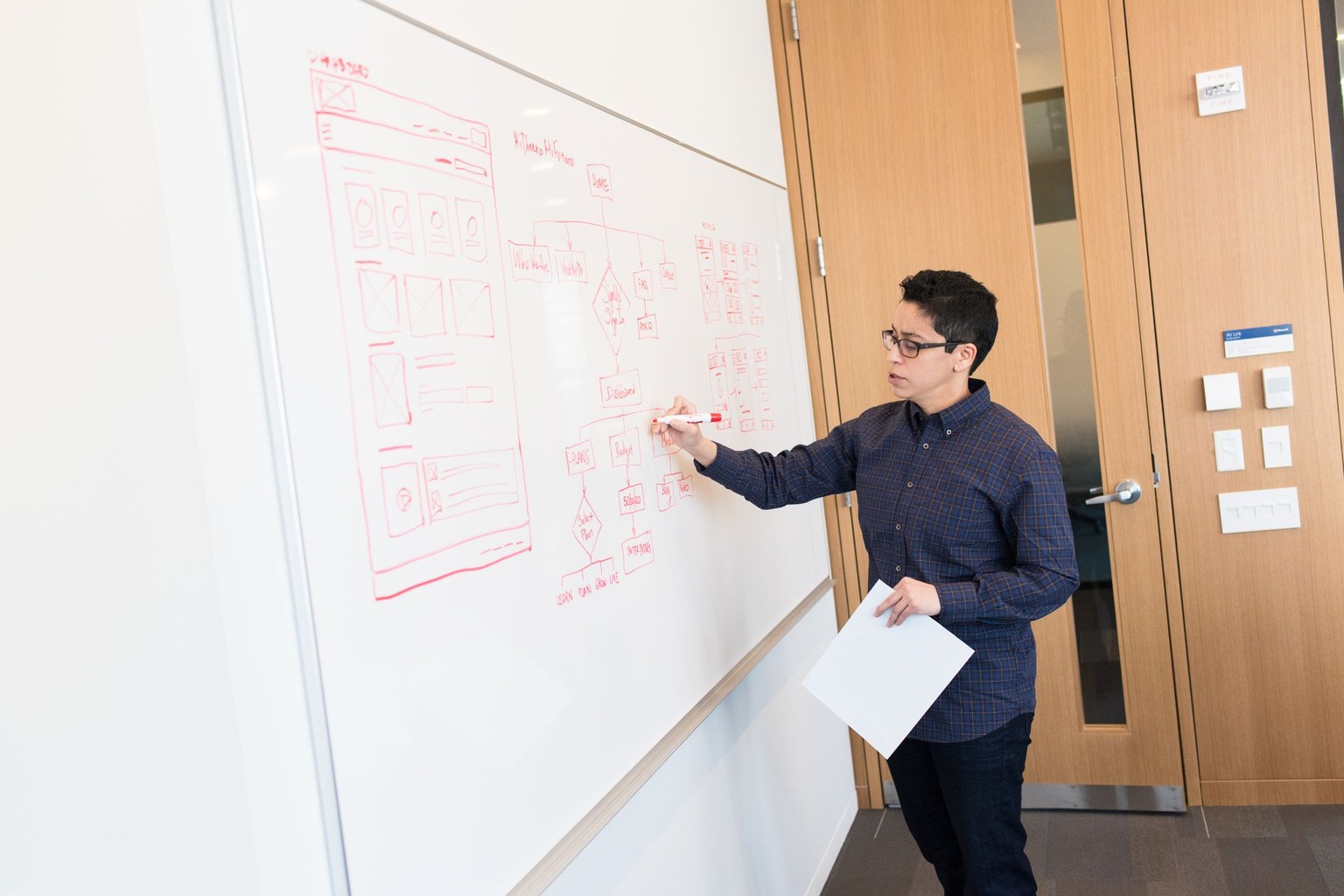
Another ritual, the “Dependency Map Refresh,” runs bi-weekly in a collaborative whiteboard tool where each feature owner draws directed edges to the systems they consume. The map auto-highlights cycles and orphan nodes, prompting immediate architectural conversations in threaded comments. When the physics team sees that the new destruction system creates a hard dependency on the streaming world partition, they can negotiate an interface contract before the code lands. This living diagram replaces the stale Confluence page that nobody updates, and it surfaces integration risk while the cost of change is still low.
Psychological Safety Metrics as Leading Indicators
Burnout does not appear in Jira velocity charts until the sprint after the damage is done. Forward-looking studios now run quarterly anonymous pulse surveys that measure psychological safety, willingness to admit mistakes, comfort asking for help, confidence that dissent is heard, and correlate the scores with defect escape rates. Teams scoring in the bottom quartile on safety ship 2.3 times more post-launch hotfixes than top-quartile peers, even when headcount and experience are matched. The correlation holds across genres, platforms, and studio sizes, making safety a reliable leading indicator of technical quality.
Leaders act on the data by rotating “blameless postmortem” facilitators, protecting learning time from feature work, and explicitly rewarding the surfacing of near-misses. One studio introduced a “Heroic Catch” badge for developers who flag a regression in a colleague’s code before it hits mainline; the badge carries a modest bonus but enormous cultural weight. Over eighteen months the near-miss reporting rate quadrupled while critical bugs in certification builds dropped 47 percent. The metric proves that culture is not a soft overlay, it is a structural component of the delivery pipeline, as essential as the build farm or the version-control server.

I’ve been playing video games since I was a kid, and that passion naturally led me to explore how they’re made. I love diving into game design concepts and sharing insights with fellow enthusiasts. When I’m not testing new titles, I’m tinkering with Unity and learning new programming tricks.