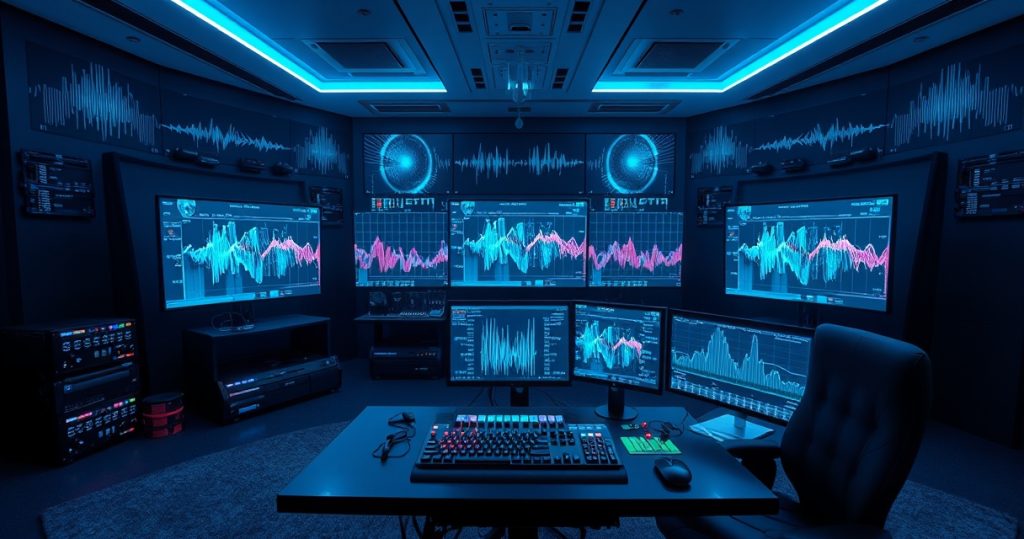
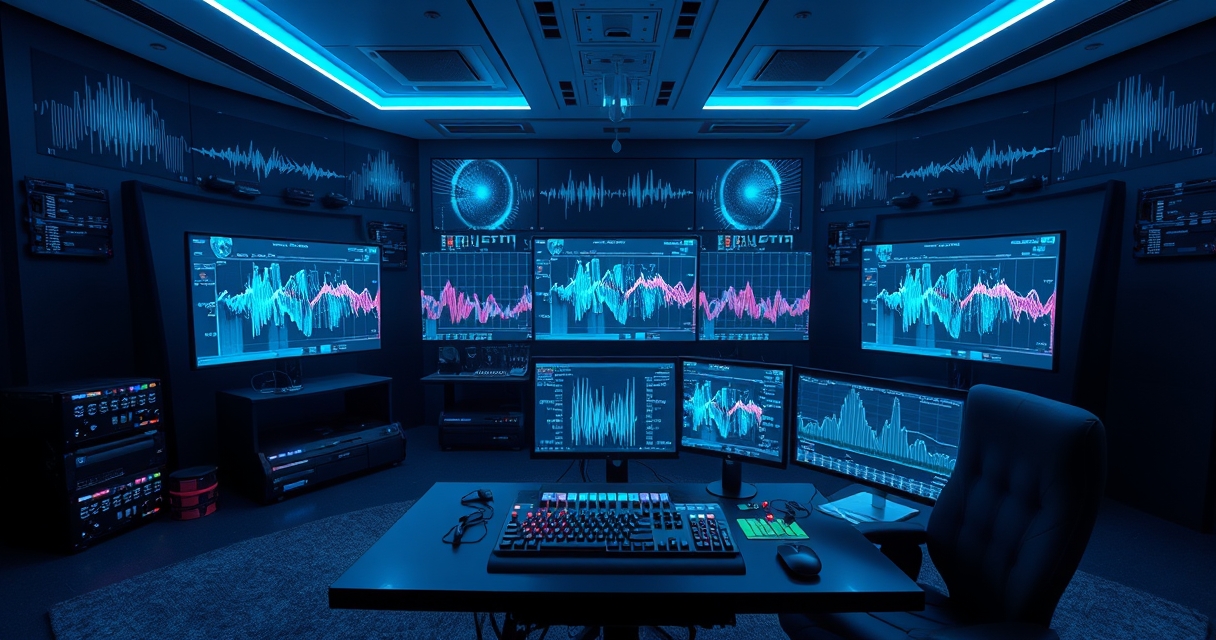
The landscape of game audio is undergoing a rapid transformation, driven by breakthroughs in spatial sound, artificial intelligence, cloud infrastructure, and wearable technology. Modern players expect immersive, responsive soundscapes that react in real time to their actions, and developers are now equipped with tools that can deliver that level of realism across consoles, PCs, and mobile devices. Understanding the forces shaping the future of game audio helps studios make strategic choices, while informing gamers about the experiences that lie ahead.
Spatial and 3D Audio Become the Default
What was once a premium feature reserved for high‑end headsets is now standard in most new consoles and engines. Object‑based audio pipelines allow sound sources to be positioned in three‑dimensional space with millimeter precision, creating a sense of depth that traditional stereo mixes cannot achieve. By leveraging binaural rendering and head‑related transfer functions (HRTFs), developers can simulate how sound interacts with a listener’s ears, delivering cues that guide navigation, emphasize danger, and heighten emotional impact.
Advances in real‑time ray tracing for audio mean that sound can bounce off virtual surfaces, attenuate through materials, and be occluded by obstacles just as light does. This level of acoustic realism not only enriches storytelling but also supports gameplay mechanics such as stealth detection and environmental puzzles. As hardware manufacturers integrate dedicated audio DSPs, the computational cost of these calculations drops, making high‑fidelity spatial audio feasible even on handheld devices.
AI‑Driven Adaptive Soundtracks
Artificial intelligence is reshaping how music and effects respond to player behavior. Machine‑learning models can analyze gameplay data on the fly, selecting or remixing musical layers to match tension, pacing, or emotional tone. Unlike static loops, AI‑generated scores can transition seamlessly between motifs, ensuring that the soundtrack never feels repetitive and always mirrors the player’s unique journey.
Beyond composition, AI assists sound designers in procedural generation of ambient textures. By training neural networks on large libraries of field recordings, developers can generate endless variations of wind, crowd chatter, or mechanical hum that adapt to environmental changes. This reduces the need for manually crafted assets while preserving authenticity, allowing smaller studios to deliver expansive audio worlds without prohibitive budgets.
Cloud Gaming and Low‑Latency Audio Streaming
The rise of cloud‑based gaming platforms introduces new challenges and opportunities for audio delivery. Latency is critical; a delay of even a few milliseconds can break immersion or affect competitive performance. To address this, providers are implementing edge‑computing nodes that process audio close to the end user, compressing streams with lossless codecs optimized for gaming frequencies.

These infrastructure upgrades enable features such as server‑side spatialization and dynamic mixing, offloading heavy DSP work from the client device. As broadband speeds continue to increase, we can expect cloud services to support high‑resolution, multi‑channel audio streams that rival locally rendered sound, making premium audio experiences accessible on low‑spec hardware.
High‑Resolution Wireless Headsets as a New Standard
Wireless technology has shed its reputation for lag and reduced fidelity, thanks to ultra‑low‑latency Bluetooth codecs and proprietary RF solutions. Modern headsets now boast certified hi‑res audio, supporting sample rates up to 192 kHz and 24‑bit depth, while maintaining sub‑10 ms latency. This convergence of quality and freedom allows gamers to move without being tethered, a crucial advantage in VR and AR environments where spatial awareness is paramount.
Battery life improvements and adaptive power management ensure that extended play sessions do not compromise performance. Integrated DSPs handle real‑time equalization, noise cancellation, and voice chat processing, freeing the console or PC to allocate resources to graphics and physics calculations. As manufacturers adopt standardized wireless profiles, cross‑compatibility between platforms will become seamless.
Haptic Integration and Audio‑Driven Feedback
Audio is no longer confined to the ears; it now drives tactile sensations through advanced haptic actuators. By mapping low‑frequency audio events to vibration patterns, developers can convey impacts, explosions, or environmental rumble directly through controllers, chairs, or even wearable suits. This multimodal feedback deepens immersion, especially in VR where visual cues alone may be insufficient.
Emerging standards such as the OpenXR haptic extension allow developers to synchronize audio and vibration across devices with a single API call. Coupled with AI‑based sound analysis, haptics can adapt intensity based on player proximity or health status, creating a feedback loop that feels intuitive and responsive.
Cross‑Platform Audio Standards Accelerate Development
Fragmentation has long plagued game audio, with each platform demanding its own implementation. The industry is moving toward unified standards like the Audio Definition Model (ADM) and the Spatial Audio Metadata (SAM) framework, which describe sound objects, room acoustics, and listener attributes in a platform‑agnostic format. By authoring once and exporting to multiple consoles, PCs, and mobile devices, studios cut production time and reduce errors.

These standards also simplify the integration of third‑party tools, from middleware such as Wwise and FMOD to emerging AI composition suites. Consistent metadata ensures that spatial cues, dynamic mixing rules, and adaptive music behave identically regardless of the end‑user hardware, delivering a uniform experience that meets player expectations across ecosystems.
Data Analytics and Personalization Shape the Audio Experience
Every gaming session generates a wealth of telemetry that can inform audio design. By analyzing metrics like player movement patterns, reaction times, and in‑game stress indicators (e.g., heart‑rate data from wearables), developers can personalize soundscapes to individual preferences. For instance, a player who frequently explores stealthily might receive a more pronounced ambient sound layer that highlights subtle enemy footsteps.
Real‑time analytics also enable on‑the‑fly balancing of audio levels for competitive fairness, ensuring that positional cues remain consistent across different hardware setups. As privacy‑preserving data collection becomes standard, the industry will leverage anonymized insights to refine AI models, creating sound experiences that feel tailor‑made while respecting user consent.

I’ve been playing video games since I was a kid, and that passion naturally led me to explore how they’re made. I love diving into game design concepts and sharing insights with fellow enthusiasts. When I’m not testing new titles, I’m tinkering with Unity and learning new programming tricks.