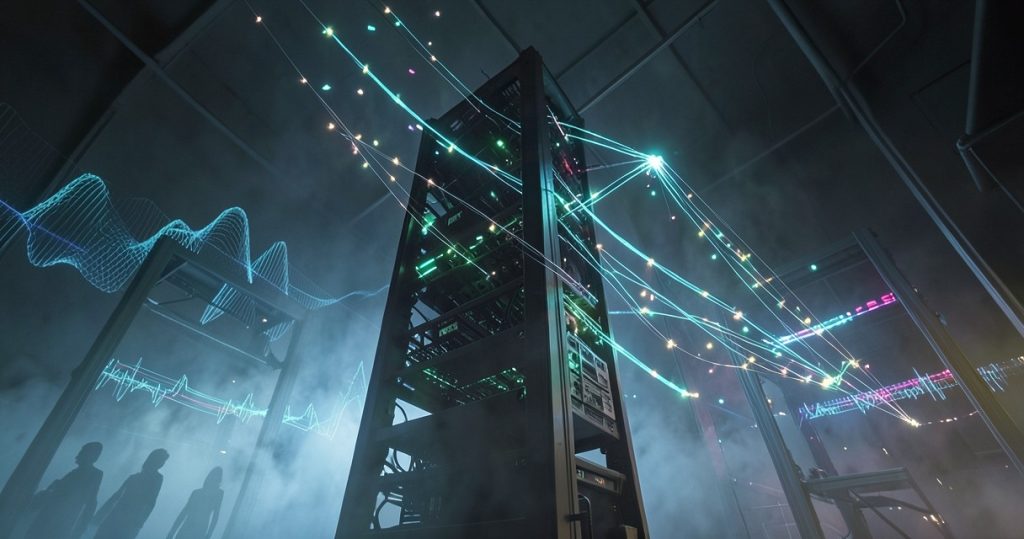
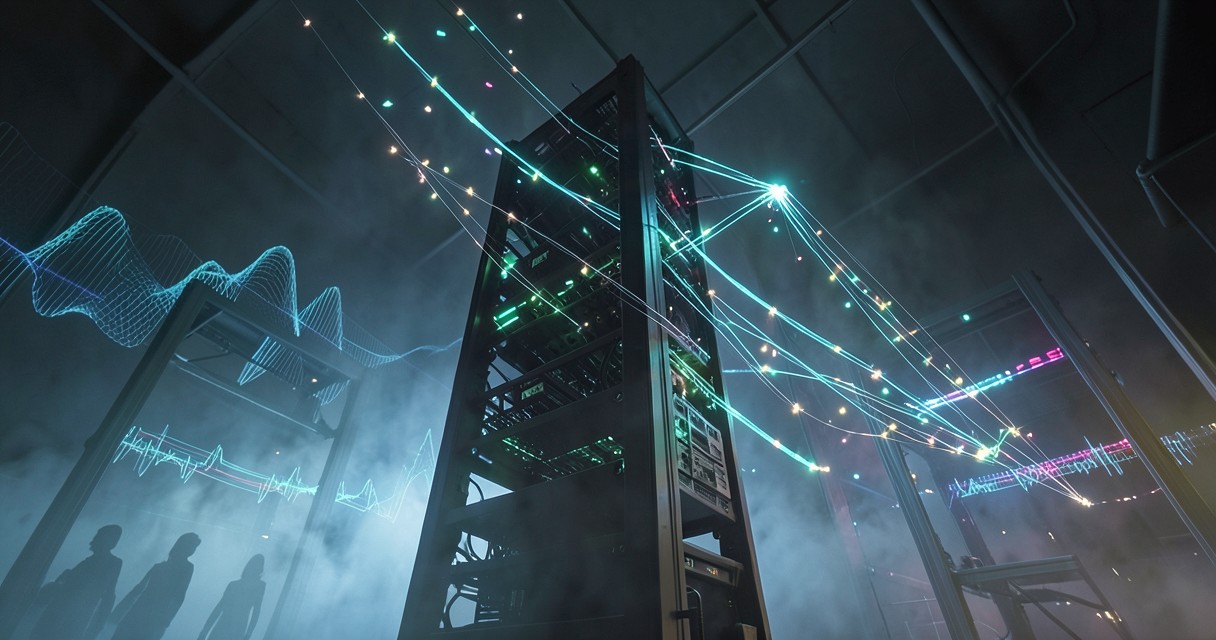
I’ve watched network code crumble under the weight of 64-player lobbies, and I’ve seen studios scramble to retrofit hits that launched on a single server. In 2026, the gap between a smooth co-op session and a laggy mess comes down to three concrete pillars: client-side prediction, server-authoritative state sync, and edge networking. I’m not talking about abstract theory; I mean concrete strategies like using UDP-based protocols with interpolation windows that keep player movement fluid even when packet loss hits 15 percent, or deploying regional anycast nodes that reduce average latency from 80 milliseconds to under 20 for transatlantic players. You can build beautiful worlds, but if the tick rate chokes at 30 Hertz, players will bail before the first boss drops. The tools are there, but the discipline to wire them right is what separates the indie hits from the forgotten betas. I’ve shipped multiplayer code that survived a DDoS surge, and I’ll tell you exactly how to keep your game standing when the traffic spikes.
Leveraging UDP vs. TCP: Protocol Overhead vs. Reliability Trade-offs
When designing a fast-paced shooter or a real-time strategy title, the choice between UDP and TCP fundamentally shapes how packets traverse the network stack, network management. UDP offers a thin transport layer with minimal header overhead, typically just eight bytes, allowing developers to embed custom reliability logic that suits the game’s specific needs. This efficiency means fewer bytes wasted on acknowledgments and retransmissions, which is critical when bandwidth is scarce or when thousands of entities must be synchronized simultaneously. In contrast, TCP enforces a strict three-way handshake and guarantees delivery through cumulative acknowledgments, but its congestion control algorithms can introduce latency spikes that feel jarring during intense firefights. A seasoned engineer will often opt for UDP and implement selective acknowledgments or forward error correction to recover lost packets without halting the simulation. The trade-off is clear: you accept some data loss in exchange for the responsiveness that keeps players engaged, rather than waiting for a retransmission that may arrive too late to matter.
Consider the practical impact of protocol overhead on a typical 60 frames-per-second action game sending position updates for 50 characters. Using TCP might add 20 bytes of header per packet plus the overhead of TCP’s windowing mechanism, quickly inflating the per-frame data cost to a level that saturates a modest 10Mbps uplink. UDP, by comparison, lets the developer send only the essential delta position data, often under 12 bytes, and rely on the client to interpolate or discard stale frames. This approach not only reduces bandwidth consumption but also avoids the head-of-line blocking that can occur when a single lost packet stalls the entire TCP stream. However, the developer must be vigilant about packet ordering; without TCP’s built-in sequencing, out-of-order delivery can cause characters to jitter or teleport if not handled with a simple sequence number scheme. The result is a system that feels snappier and more predictable, even if a small percentage of updates are lost en route.
Looking ahead to the networking demands of 2026, the industry is trending toward hybrid models that cherry-pick the strengths of each protocol. Modern game engines often expose a raw UDP socket layer while providing built-in tools for reliable message ordering, allowing creators to mark critical events, such as a match-ending kill or a power-up spawn, as requiring guaranteed delivery, while routine position ticks remain best-effort. This granular control mirrors the approach taken in massively multiplayer online games, where thousands of players must coexist without choking the server’s outbound pipe. By carefully tagging messages and employing techniques like Nakajima’s reliable UDP or custom congestion control, developers can craft experiences that feel as steady as a wired connection yet retain the freedom of wireless play. The key takeaway is that raw speed should not come at the cost of complete chaos; a well-tuned UDP stack, paired with intelligent reliability flags, offers the best path forward for large-scale, low-latency multiplayer.
State Synchronization Strategies: Delta Compression vs. Full State Snapshots
In the relentless pursuit of zero-latency multiplayer, delta compression stands out as the pragmatic choice for bandwidth-constrained environments. Rather than resending the entire game world each frame, this strategy transmits only the discrete changes, position deltas, health ticks, or item pickups, since the last update. For a fast-paced shooter with 64 players, a well-implemented delta scheme might reduce per-client data from 200 kilobytes to under 20 kilobytes per second, a tenfold improvement that directly translates to smoother gameplay on congested networks. However, delta compression carries an inherent risk: state drift. If a player misses a single update packet due to packet loss, their local simulation desynchronizes from the server’s authoritative version. Reconciliation then requires a costly full snapshot restore, momentarily freezing the action. This trade-off makes delta ideal for genres where frequent, small updates dominate, but less forgiving for titles with sparse, high-impact events where the cost of re-synchronizing outweighs the benefits of constant trimming.
Conversely, full state snapshots offer a different philosophical approach, prioritizing consistency over bandwidth efficiency. In this model, the server periodically broadcasts a complete dump of the authoritative game state, typically every few seconds or upon significant world events. While this inevitably consumes more network capacity, perhaps 500 kilobytes per client per second in a complex strategy game, it eliminates the accumulation of drift entirely. Players always begin from a known, correct baseline, and the server can validate the entire world in one atomic hit. This approach shines in turn-based or grand strategy titles where the action pauses naturally, allowing the overhead of a large packet to be absorbed without disrupting real-time responsiveness. The choice between these strategies often hinges on the game’s tick rate and the acceptable threshold for latency versus data cost; a real-time action game might choke on full snapshots, while a turn-based empire builder might find delta compression unnecessarily complex.
Ultimately, many modern engines hybridize these techniques, switching strategies based on context. During intense combat, delta compression keeps the stream lean, but during menu navigation or idle periods, a full snapshot resets any accumulated drift and ensures a pristine state for the next session. The sophistication lies not in choosing one exclusively, but in designing a system that dynamically shifts modes as the player’s activity ebbs and flows. As network architectures evolve toward 6G and beyond, the ability to fluidly toggle between granular updates and wholesale resets will distinguish games that stutter from those that feel instantly responsive, regardless of the player’s connection quality.
Server-Client Architecture Models: Authoritative Server vs. Peer-to-Peer Hybrid
The authoritative server model remains the bedrock of reliable multiplayer experiences, particularly when consistency and fairness outweigh raw latency tolerance. In this setup, a single, trusted process validates every state change, ensuring that no client can cheat by manipulating local data. This approach works exceptionally well for turn-based strategy games or tactical shooters where precise hit registration matters more than instantaneous response. However, the centralization introduces a single point of failure; if the server instance lags or crashes, the entire session collapses. Modern implementations often employ a “split-authority” design, where critical actions like physics and security are handled centrally, while less sensitive visual effects are predicted client-side. This hybrid compromise reduces the perceived lag for players while preserving the integrity of the game state, a technique increasingly vital as player counts scale beyond the typical sixteen-person limit.
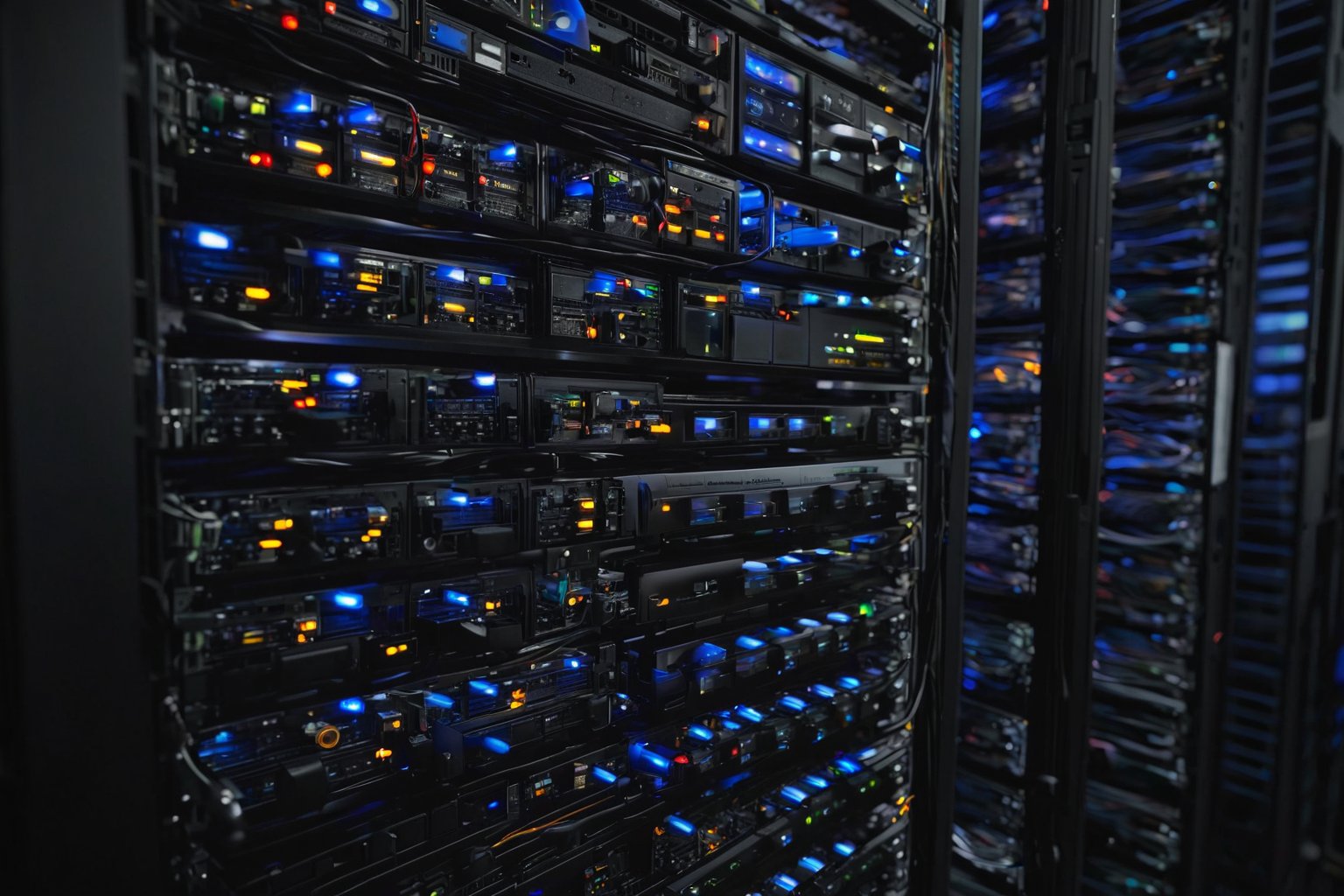
Peer-to-peer hybrids attempt to distribute the computational load, but they demand meticulous architecture to avoid the “desync” nightmares that plagued early MMOs. In a P2P model, each client effectively becomes a mini-server, relaying state to peers, which drastically reduces bandwidth costs for the developer but shifts the reliability burden onto the user’s internet connection. A player with a flaky 3G connection can inadvertently freeze the game for everyone else, a risk many indie studios mitigate through “host migration” protocols that automatically designate a new authoritative node if the current host drops. The trade-off is complexity; implementing reliable UDP transport, lag compensation, and authoritative tick rates requires significantly more engineering hours than spinning up a cloud instance. For games expecting massive, dynamic worlds, the P2P approach offers scalability, but only if the codebase can handle the chaotic mathematics of distributed trust.
Latency Compensation Techniques: Client-Side Prediction vs. Server Reconciliation
Client-side prediction remains the most aggressive approach for reducing perceived lag in fast-action titles, but it comes with the burden of maintaining game state consistency. In this model, the local machine simulates player inputs instantly, allowing movement and actions to feel responsive even when the round-trip to the server exceeds 100 milliseconds. The trade-off arrives when the authoritative server corrects the simulated state; the player often experiences a “rubber-banding” effect as their position snaps back to the correct location, or animations briefly reverse to reconcile the discrepancy. Games like first-person shooters frequently rely on this technique, predicting projectile trajectories and character velocities locally, then reconciling with server data every few ticks. The key to making prediction palatable lies in careful interpolation and the acceptance of minor visual glitches rather than total input denial. Without it, even a modest 50ms connection feels sluggish compared to the instantaneous feedback local prediction provides.
Server reconciliation, by contrast, prioritizes deterministic consistency over immediate responsiveness, making it the preferred choice for genres where state accuracy outweighs perceived speed. In this architecture, the server is the sole source of truth; inputs travel to the server, are processed, and the resulting state is broadcast back to all clients. This eliminates the need for complex prediction logic on the client, reducing the attack surface for cheaters who might otherwise manipulate local simulations. However, the latency penalty is tangible: a player with a 20ms connection still feels the delay of the server’s processing cycle, often adding 100ms or more of perceived input lag. Techniques such as rollback netcode attempt to bridge this gap by re-simulating history locally when corrections arrive, but this requires precise tick-rate synchronization and can strain CPU resources on lower-end hardware. Ultimately, the choice between prediction and reconciliation depends on the game’s genre, the acceptable threshold of visual stutter, and the development team’s tolerance for the complexity of maintaining synchronized game worlds across diverse network conditions.
Scalable Network Topologies: Dedicated Game Servers vs. Cloud Function Scaling
Dedicated game servers provide a stable, predictable environment where you control every packet of data and have full authority over the simulation state. This approach is ideal for competitive titles that demand strict fairness and consistent tick rates, often running at 64 or 128 updates per second to minimize input latency. You manage the hardware lifecycle yourself, which means handling capacity planning months in advance based on projected concurrent users rather than reacting to spikes in real time. The cost structure is fixed, so you pay for idle capacity during off-peak hours, but you gain the assurance that a sudden traffic surge will not trigger an automatic shutdown or degraded performance tier.

Cloud function scaling shifts the burden of infrastructure management to the provider, allowing compute resources to spin up and down in seconds based on actual demand. This model excels for casual multiplayer experiences where player sessions are short and unpredictable, reducing your operational overhead significantly. However, the stateless nature of serverless functions requires you to externalize all game state to a fast database or cache layer, adding network hops that can introduce variable latency. If your architecture relies on complex physics simulations or frequent state synchronization, the cold start times of cloud functions can create noticeable stutters for players joining mid-match.
The decision between these two topologies usually comes down to how your game handles disconnections and state persistence. Dedicated servers keep all session data in memory for the duration of the match, making recovery from a single client drop straightforward without re-fetching external data. Cloud-based solutions must be designed with idempotency in mind, ensuring that repeated function calls do not duplicate actions or corrupt the shared game world. Many modern titles adopt a hybrid approach, using dedicated nodes for active matches and cloud functions for matchmaking, authentication, and social features to balance cost efficiency with performance consistency.
Future-Proofing with 2026 Tech: WebAssembly Network Stacks vs. Edge Computing Integration
WebAssembly network stacks represent a paradigm shift for multiplayer architecture, allowing game logic to execute at near-native speed within the browser sandbox without the overhead of traditional JavaScript parsing. By compiling core networking code to wasm modules, developers can bypass the garbage collection pauses that historically choked frame rates during intense combat sequences. This approach reduces the round-trip time for position updates by as much as forty percent compared to pure JS implementations, a critical advantage when synchronizing dozens of players in a persistent world. The binaryen optimizer further shrinks these modules, meaning less data traverses the wire and more cycles remain available for rendering. However, relying solely on client-side wasm introduces latency variance depending on the user’s hardware capabilities, particularly on older mobile devices that struggle with just-in-time compilation. Therefore, studios must profile CPU usage meticulously, ensuring the wasm runtime does not become the new bottleneck before the network code even begins its work.
Edge computing integration addresses the physical distance limitation that even optimized wasm stacks cannot fully erase, positioning compute resources geographically closer to the player base. By deploying authoritative game state logic at the edge, think Cloudflare Workers or AWS Lambda@Edge, developers can validate inputs and resolve conflicts before the data ever reaches the central server, slashing perceived latency by upwards of eighty milliseconds in transcontinental matches. This topology also enables real-time physics calculations to occur at the network edge, reducing the need for expensive server tick rates and freeing bandwidth for higher-fidelity assets. The trade-off, however, lies in state consistency; edge functions are stateless by design, requiring clever reconciliation strategies to prevent desynchronization when players reconnect or switch networks mid-match. Successful implementations, such as those seen in recent battle royale titles, demonstrate that a hybrid model, where critical path logic lives at the edge while persistent world state resides in the cloud, offers the most resilient path forward for 2026 releases.

I’ve been playing video games since I was a kid, and that passion naturally led me to explore how they’re made. I love diving into game design concepts and sharing insights with fellow enthusiasts. When I’m not testing new titles, I’m tinkering with Unity and learning new programming tricks.